Your CPF is paying your mortgage. Did you notice?
When did you last check your CPF balances? Not your bank account. Your CPF.
For most people the answer is somewhere between last year and never, which is odd, because for many Singaporeans CPF is their single largest pool of money. It confuses people because it's one scheme doing several jobs at once. So take the accounts one at a time and ask what each is for.
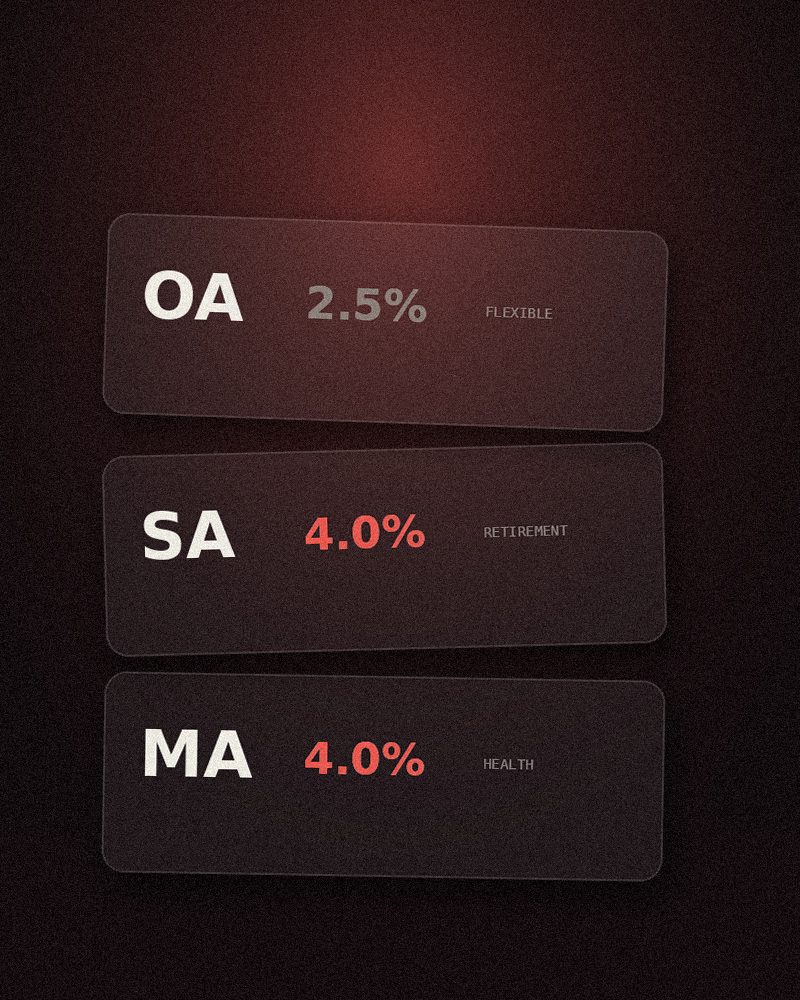
The Ordinary Account is the flexible one. OA money can pay for your home, certain insurance, your children's tertiary education, and investments under CPFIS. It earns the lowest floor rate of the three, currently two and a half percent, which is the price of flexibility. And here's the part that hides in plain sight: if you service a mortgage with CPF, your OA drains quietly every month. People look at their property and feel wealthy, then look at their OA at fifty and wonder where the retirement money went. It went into the flat. That can be a fine choice. It should at least be a noticed one.
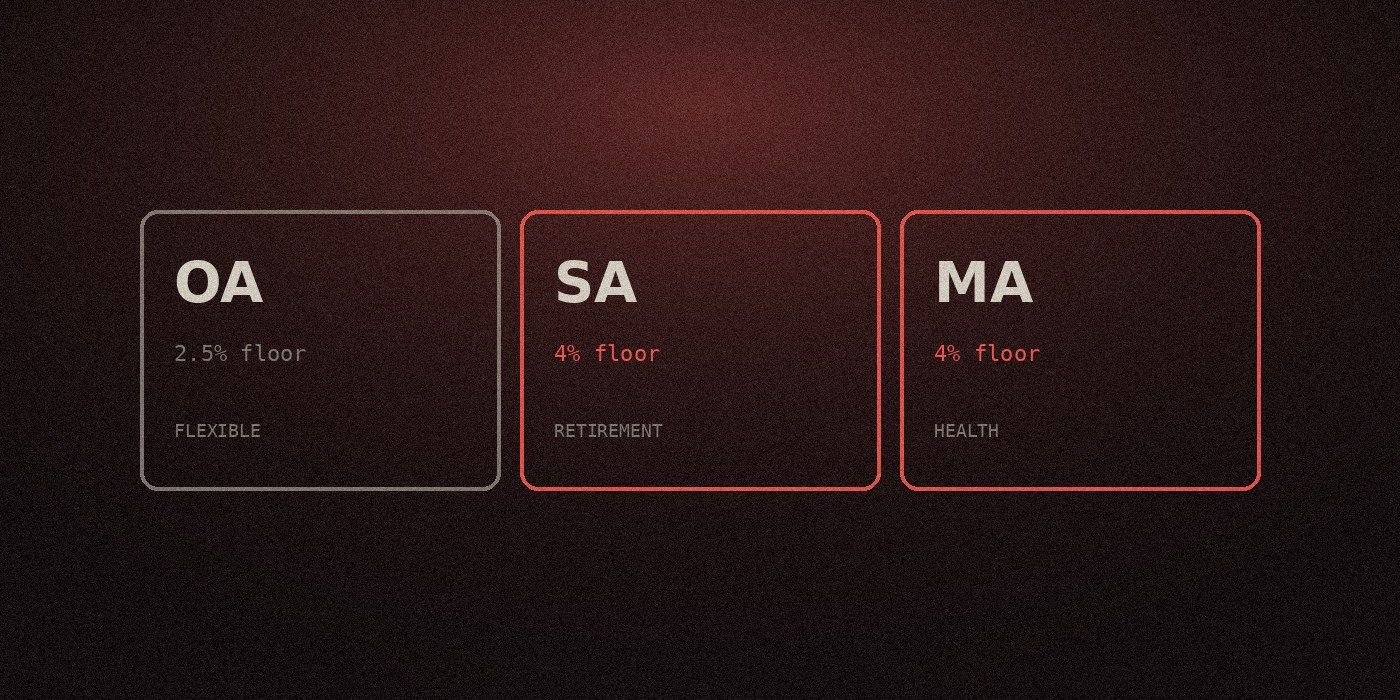
The Special Account does one job: retirement. It earns the four percent floor, compounding in the background, and it's the closest thing Singapore offers to a guaranteed long-term return. Think hard before moving SA money anywhere. One structural note: since January 2025 the SA closes at fifty-five, with savings flowing into your Retirement Account and any excess into the OA.
The MediSave Account pays hospital bills, approved outpatient treatments, and premiums for MediShield Life and related cover. Also four percent. You can't spend it freely, but it's what stands between a hospital bill and your cash, which makes it worth more than its statement suggests.
On top of the floors, CPF pays an extra one percent on the first sixty thousand dollars of combined balances, and a further percent on an initial slice for members fifty-five and up. The mechanics shift occasionally; the principle holds. Your early CPF dollars earn more than the headline rates suggest.
So, should you invest your CPF? Here's the one trade-off that decides it. CPFIS lets you invest OA savings above the first twenty thousand dollars, which means trading a guaranteed two and a half percent for market risk. Over a long horizon, with sound choices and controlled costs, that trade can be reasonable. Trading away the four percent floor is a much higher bar, and in my view it rarely clears for most people. Any pitch that needs a strong market just to beat a guaranteed rate deserves your suspicion.
(Many GreatLink funds are CPF-OA and SRS eligible, since clients ask. Whether that suits you is fact-find territory, not blog territory.)
Two habits serve almost everyone. Check your balances twice a year, the way you would any account that size. And know exactly how much of your OA the mortgage consumes each month, because that's your retirement fund paying your housing bill, and you should be the one who decided that.
CPF is the foundation layer of a Singapore financial plan. Build on it deliberately. Don't dig it up without a reason you could explain to your own family.
Every insight here is written or reviewed by me before it publishes. If it carries my name, I have read every word.