Everyone says they'll buy the dip. Almost nobody does.
Every investor I've ever met says the same thing in a calm market: next time it crashes, I'll buy.
Then the crash arrives, and they don't.
This isn't weakness or stupidity. A real drawdown never feels like an opportunity while it's happening. It feels like the start of something worse. Headlines are bleak, your portfolio is red, and every instinct says wait until things look safer. By the time things look safer, prices have recovered and the chance is gone. The gap between what we intend and what we do under stress is where long-term returns quietly die.
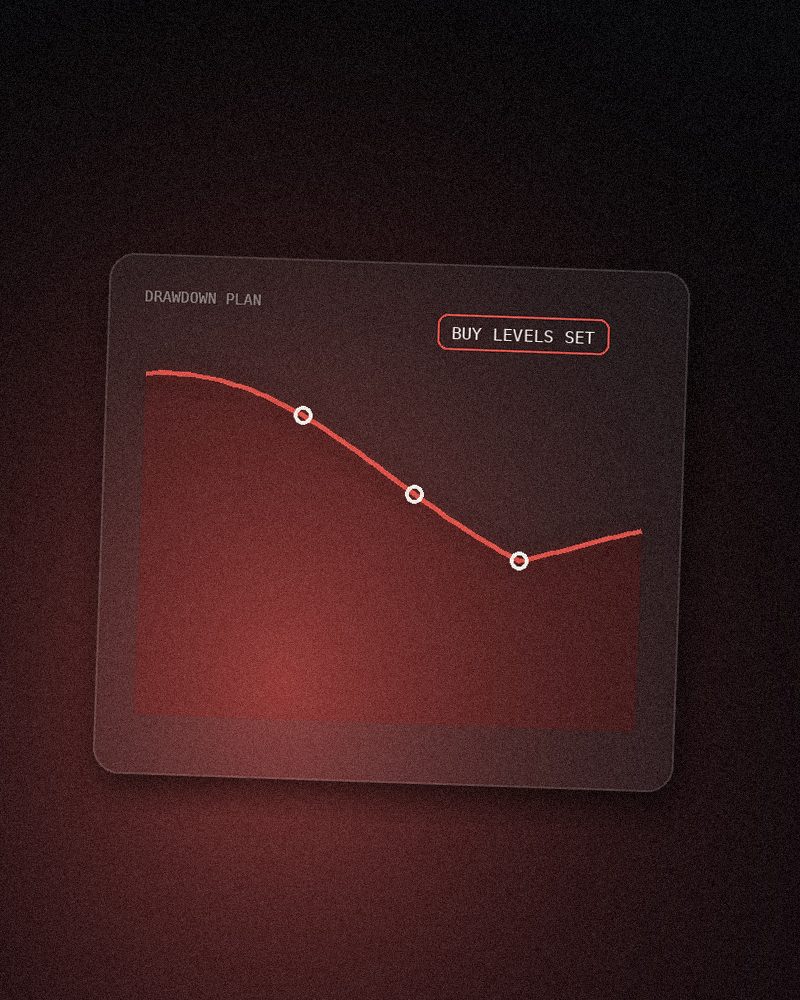
Drawdown investing is my name for the discipline that closes the gap: decide before the fall what you'll do during the fall, and write it down. The writing down is not decoration. A plan that lives in your head will be renegotiated by your fear at the exact moment it's needed. A plan on paper, agreed in a calm month, is much harder to argue with.
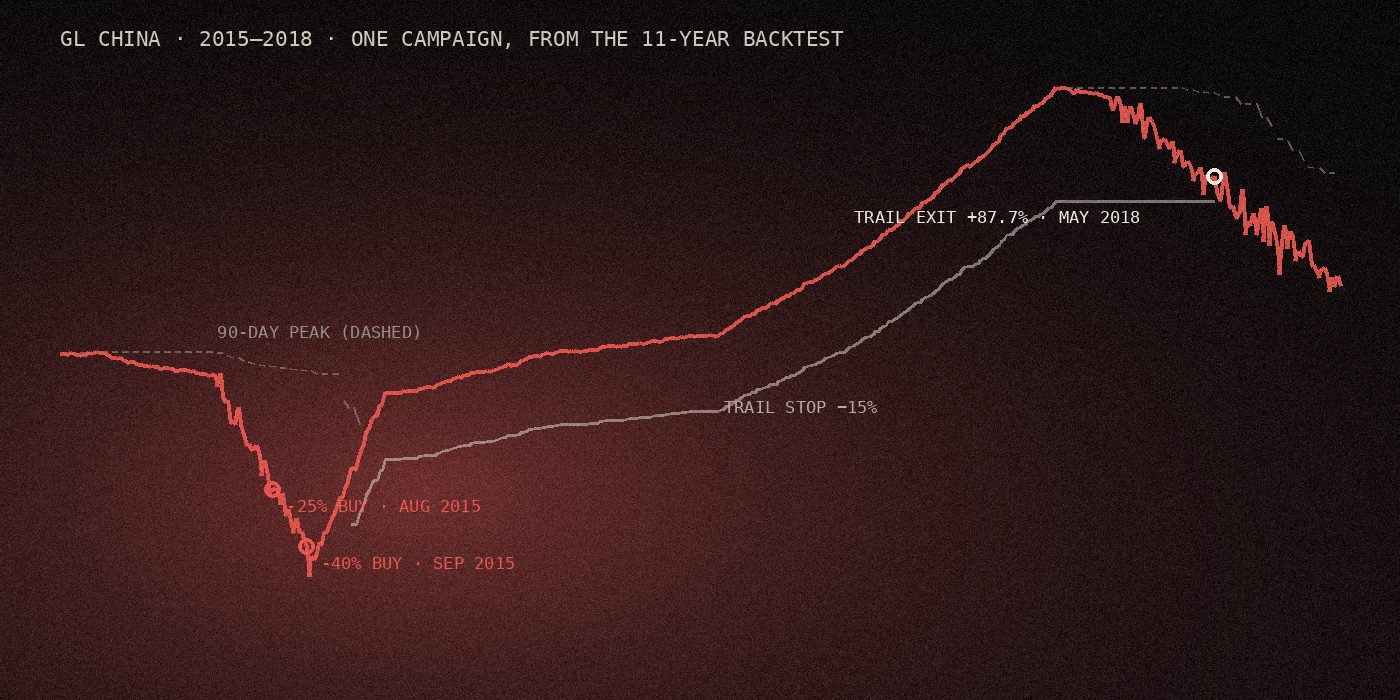
Here's the shape of it inside PEAK, my framework. A drawdown is a percentage fall from a fund's recent high. At preset levels, money goes in by tranches: a first slice at a modest decline, another if it deepens, a last one if it gets severe. Exits are set at the same sitting, take-profit and stop-loss both, written and dated. Then we wait for the market to come to us.
Notice what this structure removes. Forecasting, mostly. I don't know where the bottom is, and neither does anyone on television. Tranching means I don't need to know. Falls further? The next tranche buys cheaper. Recovers immediately? The first tranche caught it. Either way the plan was followed, and following the plan is the actual job.
The hard part isn't the arithmetic. It's the third tranche coming due mid-panic, when buying anything feels reckless. March 2020 taught a lot of people this about themselves. (It taught me, too. Knowing the theory and watching your own screen go red are different sports.) The investors who bought that month weren't braver than everyone else. Most simply had rules that made the decision for them, set by their calmer past selves.
That's the whole trick: let the calm version of you outvote the frightened version.
Two cautions, because none of this is magic. A fund can fall and stay fallen, and tranching into a structurally broken asset just averages into a loss. Fund selection and stress-testing come before any drawdown plan, never after, and I pay the most attention to the simulated scenarios where the strategy loses. And past patterns promise nothing. Markets have always recovered eventually, but eventually has sometimes meant years, and nobody can give you a timeline.
So here's the question worth sitting with: when the next drawdown comes, and it will, what exactly will you do at minus ten percent, minus twenty, minus thirty? If you can't answer in numbers right now, you'll answer with emotions later.
You can meet the next crash with a mood or with a document. Choose while it's still cheap to choose.
Every insight here is written or reviewed by me before it publishes. If it carries my name, I have read every word.