What will you do when the market falls thirty percent?
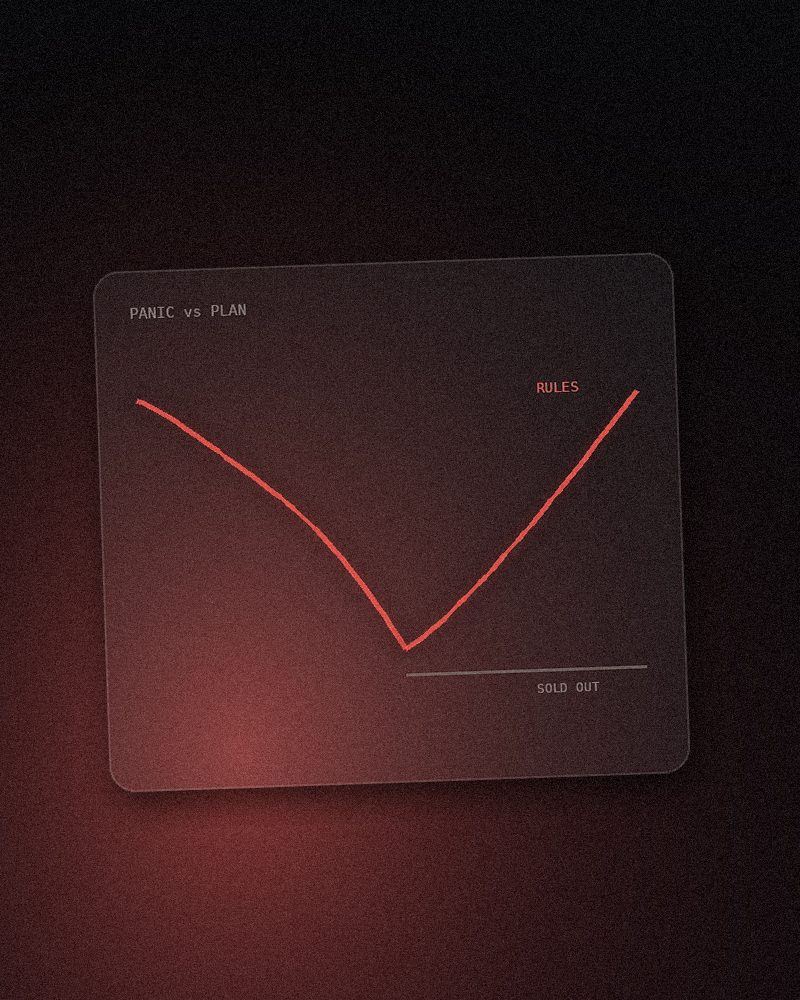
At some point, probably several points, you will watch the market fall hard while every news outlet explains why this time is different and worse. What you do in those few weeks will matter more to your lifetime results than almost anything you do in the calm years.
So it's worth deciding now, while nothing is on fire. What, exactly, is your plan?
First, understand what a crash actually is. Prices are set by buyers and sellers, and in a panic the sellers aren't weighing long-term value. They're meeting margin calls, soothing their fear, or following the crowd out the door. That's why crashes overshoot: assets change hands at prices that have little to do with underlying worth, because the sellers need out at any price. This doesn't make a crash pleasant. It does reframe it. Panic is the one time markets reliably offer discounts for temperament.

Now the three classic mistakes, and notice how reasonable each feels from the inside.
Mistake one: selling near the bottom. Rarely on the worst day. Usually a few weeks in, when the grind has worn you down and a small bounce offers an exit that feels dignified. This converts a temporary loss into a permanent one.
Mistake two: going to cash to wait for clarity. Clarity only ever arrives after prices recover, because the recovery is the clarity. Some of the strongest single days in market history sat in the middle of the ugliest months, and missing a handful of them does lasting damage.
Mistake three: the opposite vice. Emptying your entire reserve into the first dip, then standing there with nothing when the market falls another fifteen percent. Enthusiasm needs rationing too.
The antidote to all three is structure decided in advance. In my practice that structure is the PEAK framework: preset drawdown levels where money goes in by tranches, written exit rules, daily monitoring so decisions happen on schedule rather than on adrenaline. The exact numbers matter less than the existence of the document. A sober plan you'll actually follow beats a brilliant plan you'll abandon at the bottom. (Most brilliant plans are abandoned at the bottom. That's how they stay brilliant, untested.)
Two boring preparations make all of this far easier. Keep a real emergency fund in cash, because the worst seller is a forced seller, and forced selling is usually life expenses colliding with a downturn. And size your risk before the crash: if a thirty percent fall would wreck your sleep or your plans, fix the allocation now, not mid-panic by capitulating.
I won't tell you markets always recover quickly. Sometimes they've taken years, and the past guarantees nothing about the next episode. Anyone who promises you a timeline is selling something.
But the pattern inside every crash is consistent: money moves from the people who react to the people who prepared. The transfer is decided before the crash begins.
Which side of it will you be on? You're answering that question right now, in a calm market, whether you mean to or not.
Every insight here is written or reviewed by me before it publishes. If it carries my name, I have read every word.