 LU JIA JUN
The claim we almost never made

In 2021, while I was on an internship, my father had a stroke. I found out on a Teams call. I've written elsewhere about what that moment did to me. This article is about something narrower: a policy we almost never claimed, because nobody remembered it existed.
It surfaced weeks later, while the family sorted paperwork between hospital visits. A policy document, bought years earlier from an adviser long out of contact, sitting in a drawer with warranty cards and old IC photocopies. No one had thought about it in years. If we hadn't gone through that drawer, the claim that helped pay for my father's care would simply never have been made.
Sit with that for a second. The insurer would not have chased us. Insurers pay claims that are filed, not claims that are owed.
I handled that claim myself, and it rearranged how I see this industry. The product worked. The system around it failed. A policy nobody remembers is functionally identical to no policy at all, except that someone paid premiums for years to own it.
Since then I've learned my family wasn't unusual. Ask around and you'll find the same drawer in many Singaporean homes: something bought from a relative who used to sell insurance, a bancassurance product signed during a promotion, a policy from a roadshow nobody can name. Each document is money and protection that exists only on paper unless someone keeps it alive in memory.
Does your family have that drawer? You already know the answer.
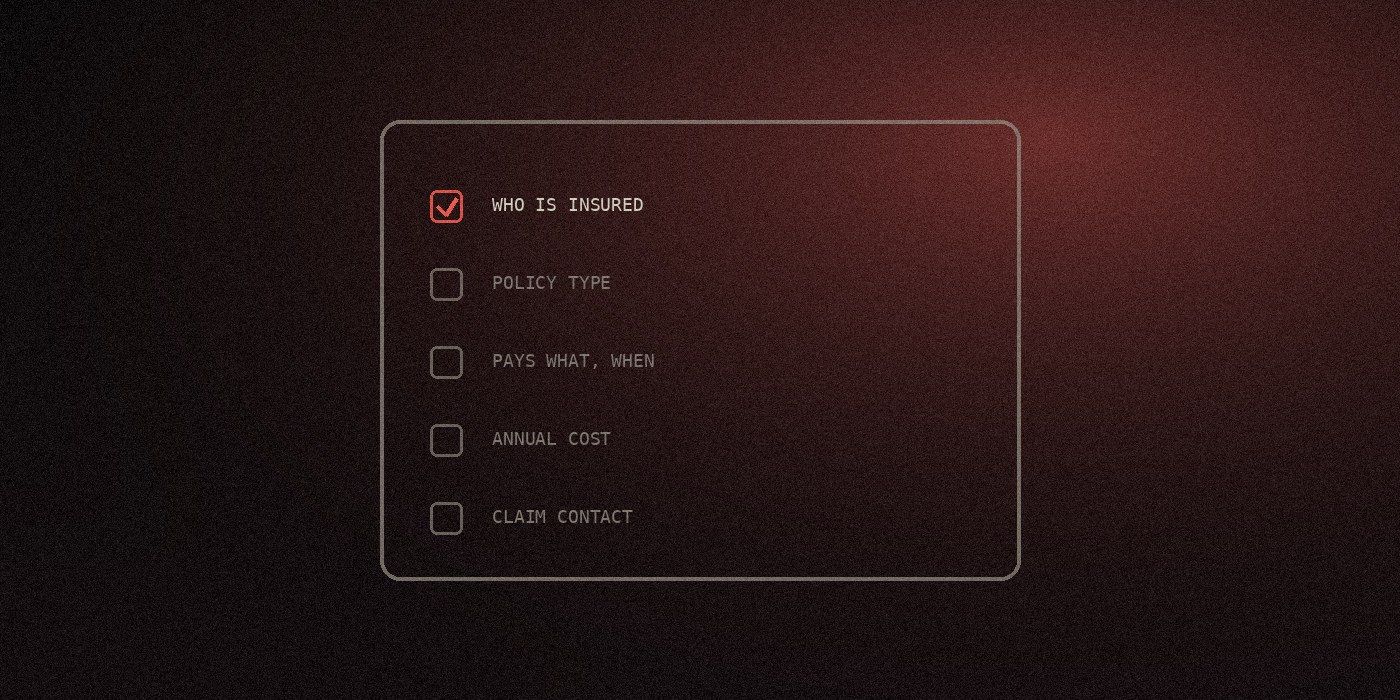
So here's the exercise I now give everyone, the one I wish someone had given us. Set aside a single afternoon. Gather every policy in the house, yours and your parents', and build one list with five columns: who is insured, what type of policy, what it pays and when, what it costs each year, and who to contact for a claim. The insurer's hotline fills any blanks; you can ask your insurer for a policy summary at any time. While you're there, check the nomination on each policy, because payouts move faster and cleaner when a valid nomination exists.
Then do the step almost everyone skips: tell your family. The list is useless if it lives only in your head, because claims happen precisely at the moments when you may not be around to explain things. Put it somewhere known. Tell two people where it is. Revisit it once a year. Chinese New Year works, since everyone's gathered anyway and mildly looking for an excuse to leave the table.
This is the least glamorous work in personal finance. No return percentage, no clever strategy, nothing to boast about at dinner.
But I watched a forgotten document become real money for my family in the worst week of our lives, and I've never since believed organisation is a small thing. The drawer is where good planning goes to die.
One afternoon. One list. Two people told. Do it this month, while the thought is still warm.
Every insight here is written or reviewed by me before it publishes. If it carries my name, I have read every word.
Lu Jia Jun · Financial Adviser Representative, Great Eastern Financial Advisers · RNF LJJ300837068. General information only, not financial advice.